Sometime in the ninth century — perhaps the most extraordinary time in Tantrik history — in the Valley of Kashmīr — one of the most beautiful places on Earth — a revelation occurred that was so powerful, it’s still resonating today, 1200 years later . . . and now that revelation is renewed. Before I explain that statement, a little of the extraordinary history of this text.

Kashmir Valley. unaltered photo, taken by Stuart Williams
Around the same time that Vasugupta was collecting the Shiva-sūtras from the lips of the awakened beings (Siddhas and Yoginīs) who lived in the hills on the edge of the valley, someone else was collecting and writing down the practices they taught. We don’t know who collected these oral transmissions of Tantrik Yoga practices, but whoever it was organized them into a set of 112 practices documented in 116 Sanskrit verses, and then composed 23 introductory verses and 23 concluding verses to frame those practices and contextualize them within a radically nondual View. This anonymous author called the resulting text the Vijñāna-bhairava-tantra, “the Tantra of the Bhairava who is Consciousness.” (Hereafter VBT.)
The 46 verses that frame the 112 practices demonstrate that their author was both a great poet and a deeply awake (‘enlightened’) being who was able to break free of cultural and religious conditioning of his or her time. The VBT was (and is) a revolutionary text, for it even challenged the religious beliefs of the very Tantrik situation in which it was situated (for evidence of this, see the concluding verses).
Its impact on the tradition of nondual Shaiva Tantra in Kashmīr was huge. Many subsequent awakened masters, such as Abhinavagupta and Kṣemarāja, quoted it frequently, and the great Krama guru Vīranātha even composed a sequel to it as a kind of homage. It continued to be studied & practiced, copied and recopied by hand all the way down to the 20th century.
Even when the Tantrik tradition had almost died out in Kashmīr, and even when it was no longer the case that all the practices of the text were understood, the VBT was still taught from guru to disciple. Thus, in the 1930s Swami Lakṣman Joo learned it from his guru Swami Mahtab Kak. In the mid-1950s, American poet Paul Reps journeyed to Kashmīr and was fortunate to find Lakṣman Joo (who was not at all famous then) in his tiny āshram in Śrīnagar. Lakṣman Joo taught him the entire VBT. Reps was then inspired to render the practice teachings of the VBT in poetry. He wrote 112 poetic sentences, attached a preamble, and published the resulting text in a fashionable men’s magazine in 1955. This was the first-ever version of the VBT in English. It was republished in Reps’ book Zen Flesh, Zen Bones in 1957 under the title “Centering.” Reps’ version is notable because it was the basis for two well-known versions of the text: Osho’s The Book of the Secrets and Lorin Roche’s The Radiance Sutras. Neither of these is in ANY sense a translation of the VBT, but they did much to bring it into popular awareness.
Actual translations of the VBT that approach accuracy have been, for the most part, almost unreadably dense and packed with Sanskrit jargon. I began studying the VBT with the aid of these translations (such as Jaideva Singh’s) more than 25 years ago, in Paul Muller-Ortega’s “Hindu Tantric Yoga” class in the year 2000. Later, having been trained in Sanskrit by some of the greatest professors in the field, I was able to read the text in the original language. Over the course of some years, I devoted countless hours to the task of translating it into readable, accessible English without sacrificing accuracy. The first draft of my translation was completed in 2018. A pdf of that version circulates online and is heavily cited by Wikipedia, though the translation has been considerably improved since then.
Now, finally, after so many years, a momentous day has come (at least from my perspective!). My final translation AND commentary on the text is being published within a new, brilliantly designed app, Tantra112. Why publish it in app form, you might ask, preferring an old-fashioned paper book or at least an audiobook? Precisely because it is only in an app that the text can be presented in a way that does it justice. The app includes not only the complete written translation (with the original Sanskrit), but also includes audiobook chapters carefully explaining the more difficult verses, and ALSO includes 60+ guided meditations in audio form.
Believe it or not, the VBT is best presented in app form. This is because it was never meant to be read as a book, from beginning to end; it is a practice manual, from which Tantrik teachers throughout the centuries drew the practices most suited to the mental and physical constitutions of the their students. The 112 practices (yuktis) of the text are NOT arranged in the order they should be practiced; they are arranged thematically and mnemonically. The app allows the practices to be presented in modular form, ordered in the way that makes sense for most practitioners. Each practice is fully explained in an accessible manner without sacrificing detail or accuracy. As far as I’m aware, no previous translation has managed this.
If you think this blog post is essentially just a sales pitch for the app, I guarantee you’ll feel differently once you try it for yourself. I have no doubt that history will record this as the first full translation of a Tantrik practice manual in the modern age of technology. If the teachings and practices of a Tantrik scripture don’t land in your body and your direct experience, then they were not fully translated to you. Hundreds of early adopters have testified that the app accomplishes exactly this.
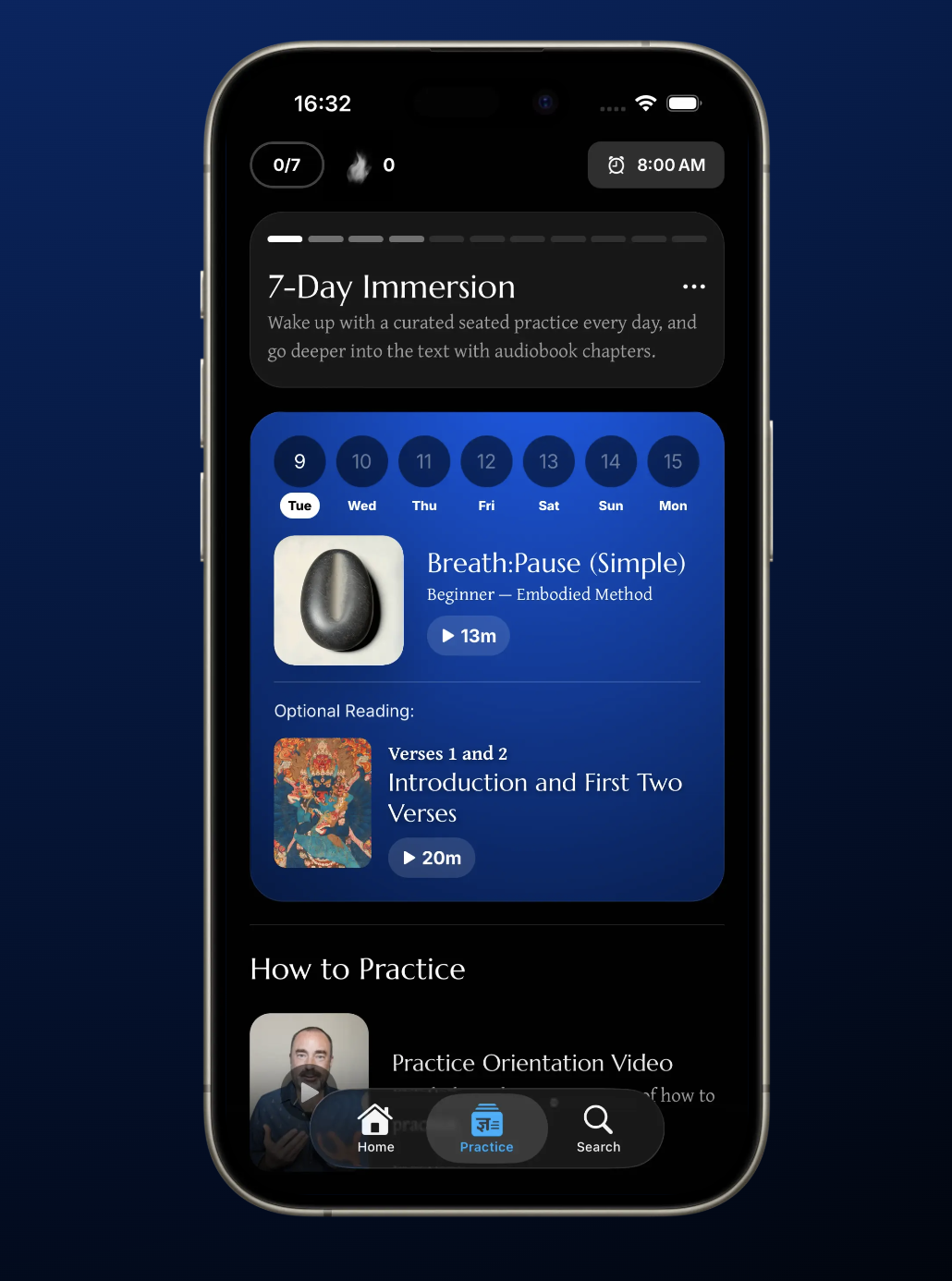
Screenshot from the Tantra112 app.
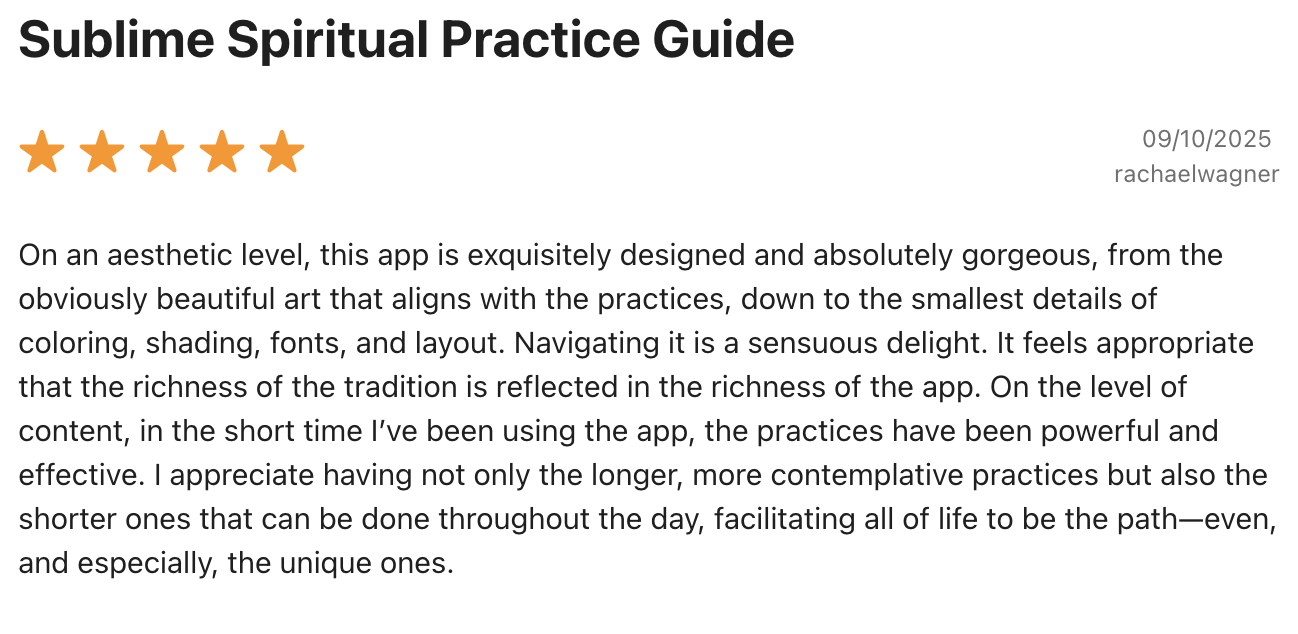
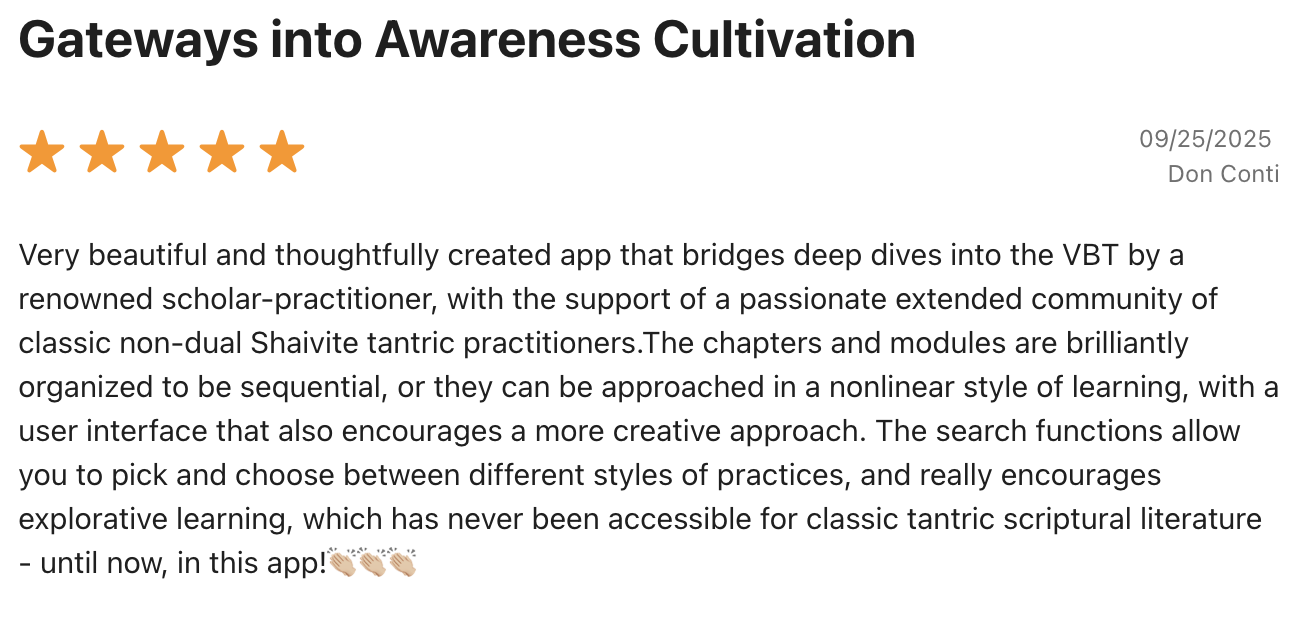
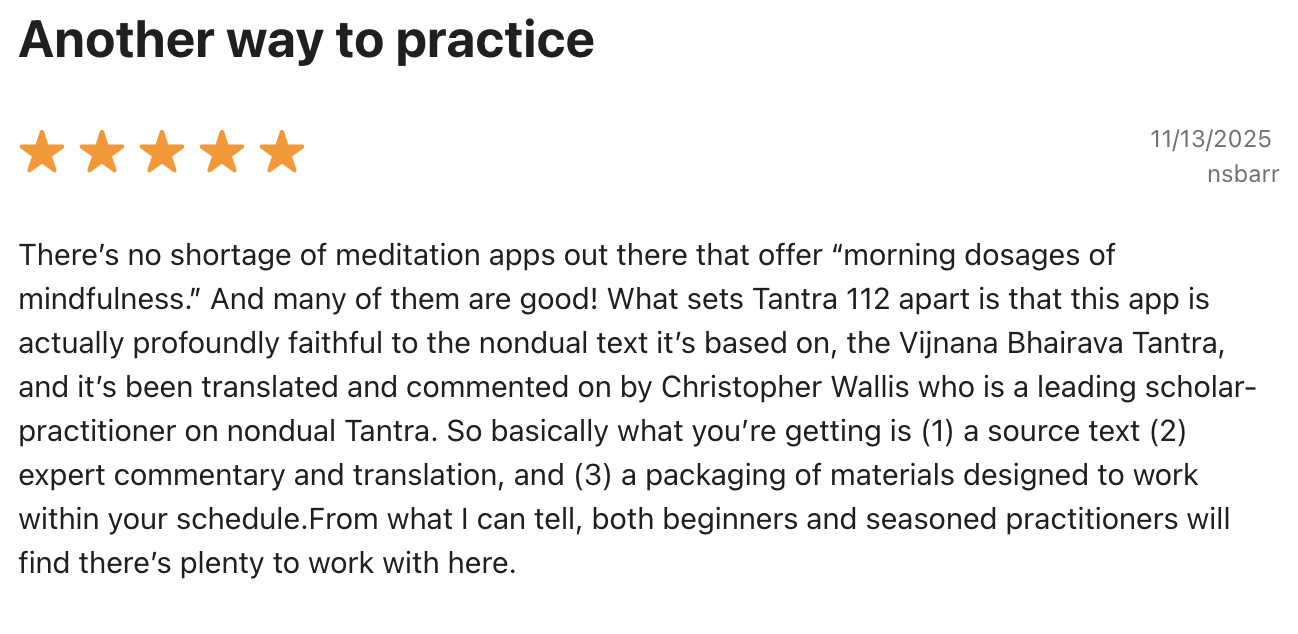
I am profoundly grateful to my app designer, the brilliant Alec Molloy, for helping me bring this sacred text fully into the modern age. It is a truly a dream come true. After a year of beta testing, the 1.0 version of the app launches in mid-March 2026. We will honor the occasion with a free webinar on March 15 that will dive deep into the teachings and practices of the VBT. Come back to this page and hit refresh closer to the date for the details! In the meantime, please check out Tantra112.app and check out the 80 five-star reviews in the app store from our early adopters.
This labor of love is the product of literally thousands of hours of work on my part AND thousands more on Alec’s part. For that reason, we are unable to offer it for free. However, anyone who attends the webinar on 15 March will receive one month of free access.
May the astonishingly powerful practices of the Vijñāna-bhairava-tantra benefit the whole world! May all who are touched by the power of its transmission experience the peace, joy, and love that is their birthright and their true nature. And may all beings realize their freedom.
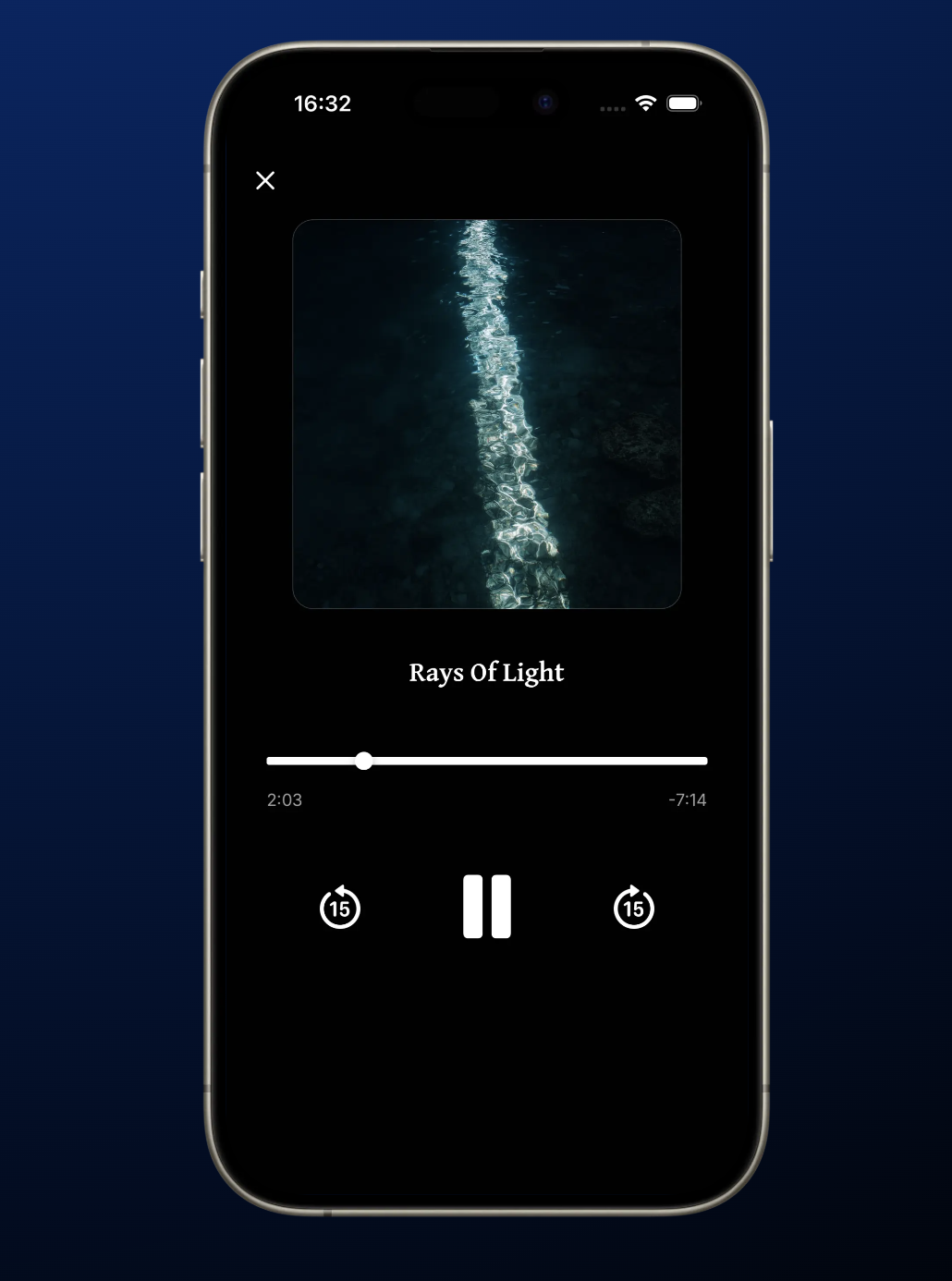
Guided meditation in the Tantra112 app.